




# # Search
# # Language # #
ZH EN
# #
English # #
Energy Storage

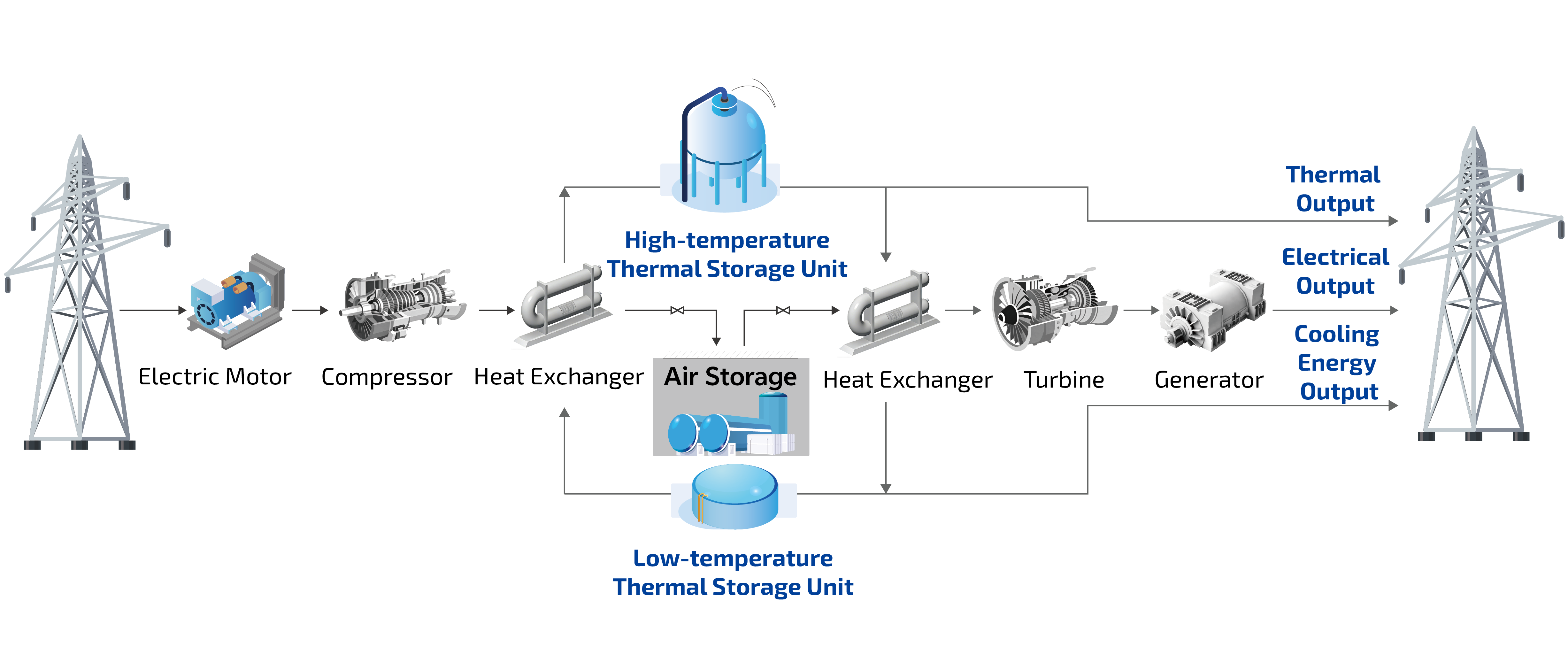
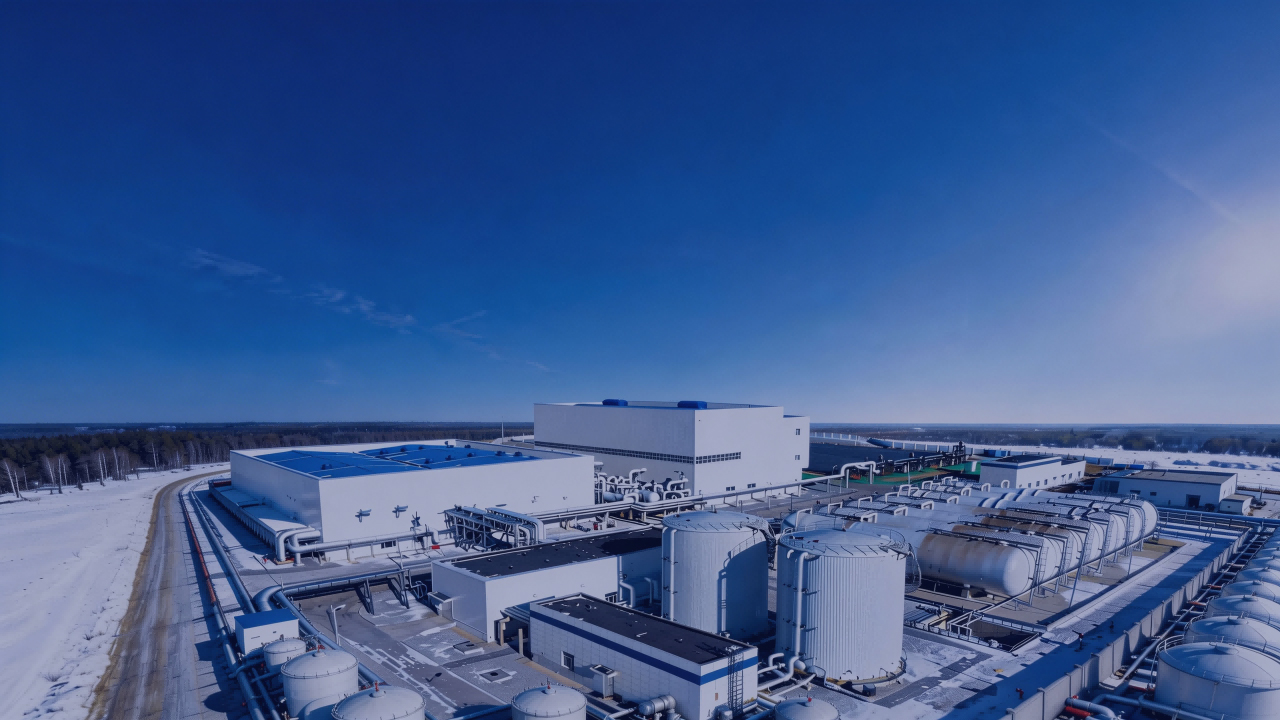
During charging, electricity drives compressors to generate high-pressure air and compression heat, which are stored separately.

Energy Release

During discharge, high-pressure air and stored heat are combined to drive turbines for power generation. Excess heat can be used for heating, and cold air produced during expansion can be used for cooling, enabling combined cooling, heating, and power (CCHP).


Learn More
Comparison of Energy Storage Technologies
Technical Specifications

Compressed Air Energy

Storage (CAES)

Pumped Hydro

Storage (PHS)

Lithium-ion

Battery

Flow

Battery

Power Scale

MW-GW GW kW-MW kW-MW

Discharge Duration

2-10h 6-12h 1-2h 4-6h

Stability Characteristics

AC Storage: Features standby, phase modulation, and black start capabilities; Provides rotational inertia

AC Storage: Features standby, phase modulation, and black start capabilities; Provides rotational inertia

DC Storage

DC Storage

System Efficiency

~70% ~75% ~80% ~70%

Safety Performance

High

High

Low

Medium

Construction Period

12-24 Months

72-96 Months 3-6 Months 6-9 Months

Service Life

40-50 Years

40-50 Years 5-10 Years 15-20 Years

Unit Cost (RMB/Wh)

1.0-1.8 1.2-2.0 0.7-1.0 2.0-2.5

LCOS (RMB/kWh)

0.16-0.30 0.20-0.33 0.24-0.31 0.43-0.54


  • Note: Levelized cost of electricity (LCOS) is calculated over a 30-year lifecycle.
  • Battery replacement costs are included.
  • LCOS = (total capital cost + total operational cost) / total discharged electricity.
  • Charging electricity cost is assumed to be zero.
  • All costs are calculated based on generation-side capacity.


Comparative Advantages

CAES vs Pumped Hydro

CAES vs Lithium-ion and Flow Battery storage systems

Construction & Deployment

Offers high flexibility in site selection and significantly shorter construction periods

Features massive energy storage capacity and a long operational service life

Technical Performance

Highly adaptable regulation capabilities with strong combined heat and power (CHP) coupling effects

Ensures grid stability and high operational safety with zero-carbon and environmentally friendly processes

Economic Efficiency

Construction costs are comparable to traditional large-scale storage, while maintenance costs remain low with significant cost-reduction potential

The annualized average cost is substantially lower than that of Lithium-ion and Flow Battery storage systems

Advantages of CAES
Large Capacity

One of the largest-scale physical energy storage technologies, with single plants reaching GW-scale and storage durations of 2–10 hours

High Safety

No combustion, no chemical reactions, and no harmful emissions

Strong Grid-Forming Capability

Provides synchronous generator-level performance, including inertia support, black start capability, fast response, and active/reactive power regulation

Low Cost

Comparable LCOE to pumped hydro, with over 40 years of lifespan significantly reducing lifecycle costs

Flexible Deployment

Multiple storage options without strict geographical constraints, with construction periods as short as 12–24 months

Long Lifetime

Designed lifespan of 40–50 years, minimizing reinvestment and resource waste

End-to-end Solution

With the capacity to develop and construct custom GW-scale power plants, we provide DTEPCO full-process services—including Project Development, Technical Process, Engineering Design, Equipment Development, Project Construction, and Operational Optimization—centered on our core expertise in CAES system process design.

Project development & commercial planning We provide customized development solutions for projects ranging from the megawatt to gigawatt scale, covering everything from site selection and investment evaluation to grid connection design.
System process design & dynamic simulation By leveraging our proprietary digital platform to perform dynamic simulations of multi-energy-flow systems under all operating conditions, we achieve precise design and technological leadership in pressure storage system processes.
Core equipment development & parameter definition We possess in-depth expertise in the engineering design of three core pieces of equipment—compressors, heat exchangers, and turbines—and ensure control over key parameters and system integration from the very outset of the technical process.
EPC delivery (design, procurement, construction) We provide end-to-end EPC services covering everything from design and procurement to commissioning, ensuring high-quality and safe project delivery.
Intelligent O & M & asset optimization Use digital twin models for condition assessment and predictive maintenance, and enhance the overall returns from power plant participation in electricity market transactions through intelligent control.
Multi-Scenario Applications
Generation Side

Smooth renewable output, support peak regulation and frequency control

Grid Side

Provide inertia and reactive power support to enhance grid stability

End-User Side

Reduce energy costs and improve reliability for industrial users

Featured Projects
#